The Campaign Ended in October. The Yard Signs Kept Campaigning Through Christmas.
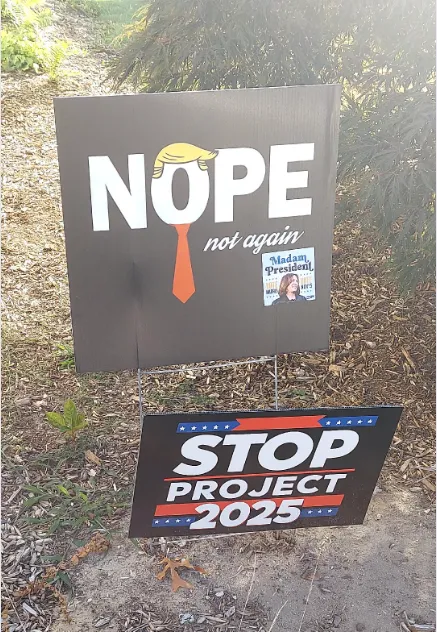
Photo: Mdnavman, CC BY-SA 4.0, via Wikimedia Commons
In most of America, the first Tuesday after the first Monday in November is when campaign materials come down. In one mid-sized town in the Midwest, they came down in late October — along with the candidate herself, who withdrew from the school board race after a family matter made the campaign impossible to continue.
The signs came down. The mailers had already gone out. And the short links printed on hundreds of them? Those kept right on working.
That's not a metaphor. Short links don't know an election happened. They don't know a candidate withdrew. They just sit there, pointed at whatever destination they were assigned, quietly redirecting voters to a donation page for a campaign that no longer exists.
What Orphaned Links Actually Do in a Civic Campaign
The campaign in question had done a lot of things right. Branded short domain instead of a generic one. Consistent naming across materials. A volunteer who set everything up in a single afternoon.
What they didn't have was a plan for the end.
After the withdrawal, three things happened over the following weeks:
The donation link kept taking money. A handful of supporters who received late mailers clicked through and donated to a campaign account nobody was actively managing. Refunds had to be issued manually, one at a time, by a volunteer who'd already moved on with her life.
The volunteer signup form stayed live. People signed up for canvassing shifts that would never happen. A few of them showed up at the listed address in November. One left a note under the door of an empty field office.
The "learn more" links led nowhere useful. The candidate's statement page had been taken down, so clicks landed on a broken page — the digital equivalent of a yard sign for a candidate who doesn't exist.
None of this was malicious. It was just the absence of a decision. Nobody ever asked, "What happens to our links when this ends?"
Political Campaigns Are a Stress Test for Link Management
There's a reason campaigns make such a good case study. They have everything that stresses a link infrastructure:
- A hard expiration date. Election Day is the ultimate deadline, and every material printed before it outlives it.
- Physical media in the wild. Yard signs, bumper stickers, door hangers, direct mail. You cannot recall a yard sign.
- Volunteer-driven execution. The person who set up the links is often gone before the links stop being clicked.
- Reputational stakes. A dead link on a political mailer doesn't just look sloppy. It looks like the campaign didn't care, which reflects on the candidate even after they've left the race.
Swap "election" for "product launch" or "annual conference" and the same dynamics apply to any small business or nonprofit. Campaigns just compress the timeline and raise the temperature.
The Pre-Launch Link Governance Checklist
If you're managing links for a campaign — political, nonprofit, or commercial — here's the plan that campaign wishes it had. Do this before anything goes to print.
1. Assign every link an owner
Not "the campaign." A named human being with the login credentials and the authority to change destinations. If that person leaves — and in campaigns, people leave constantly — the ownership transfers on day one of their departure. This is the same continuity principle that applies to any small team: links without owners become landmines.
2. Give every link an expiration behavior
Decide now, while you're calm, what each link should do after the campaign ends. Most link management tools let you redirect, swap destinations, or point to a holding page. A donation link that should stop taking money after Election Day can be redirected to a simple "this campaign has concluded" page. That takes thirty seconds. Doing it after the fact, while refunding donations, takes days.
3. Never print a link you can't edit
This is the cardinal rule. Anything going on a yard sign, a car magnet, a mailer that gets printed in bulk — it goes through a short link you control, never a raw destination URL. The whole point of an editable link is that the physical world is permanent and the digital world isn't. Print once, point anywhere.
4. Build the wind-down into the campaign calendar
Campaigns schedule everything: GOTV pushes, ad flights, press releases. Add one more line item: Link sunset, November 5. An hour of work that redirects donation pages, swaps volunteer forms to a thank-you screen, and updates the main bio link to the candidate's final statement. That hour is the difference between a graceful ending and months of awkward clicks.
5. Audit what's still live in December
Thirty days after the campaign, check your analytics. Which links are still getting traffic? Mailers that arrived late. Signs nobody took down. A fridge magnet in someone's kitchen. See where those clicks go and make sure the destination is still appropriate — because people are still clicking.
The Nonprofit Angle: This Isn't Just About Elections
If you run a nonprofit, you live this same cycle annually. Gala season. Year-end giving. The 5K in the spring. Every event creates a small fleet of printed materials with links baked in, and every event ends while the materials keep circulating.
The school board candidate's campaign wasn't a failure of technology. Every tool they needed existed. It was a failure of governance — the boring, unglamorous work of deciding who owns what and what happens when it's over.
Links are infrastructure, and infrastructure needs maintenance schedules. The campaigns that get this right look effortless. The ones that don't leave yard signs quietly campaigning through Christmas, long after anyone's around to answer the questions they raise.
Your links will outlive your campaign. The only question is whether they'll outlive it gracefully.