The Truck Wrap Looked Great. Too Bad the Link Inside It Was Dead in Four States.
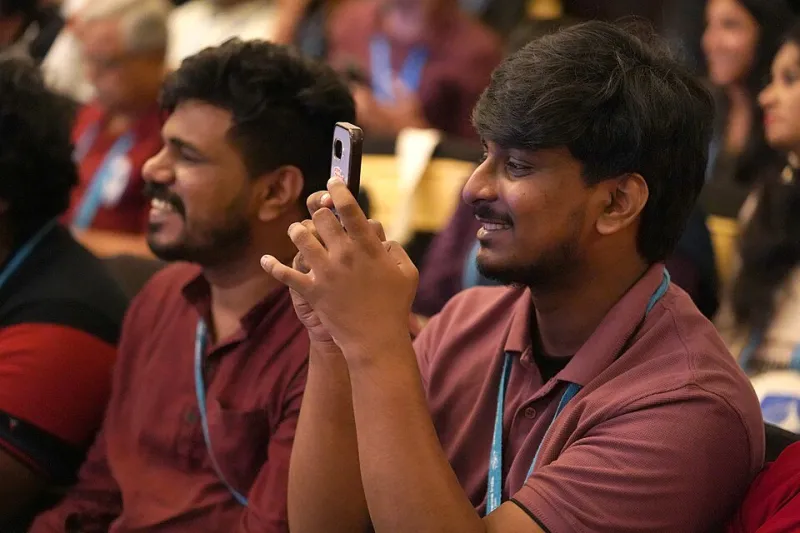
Photo: Gangulybiswarup, CC BY 4.0, via Wikimedia Commons
There's a particular flavor of stomach-drop that comes from standing in a grocery store parking lot, watching somebody scan the QR code on your client's delivery van and get... nothing. Not a slow page. Not a weird redirect. Nothing. The driver drives off, the customer shrugs, and you're left doing the math on what that wrap cost.
That scenario plays out every day across the country, and it almost never happens because someone forgot to test. It happens because the testing happened in the wrong place, on the wrong devices, by the wrong people — usually the marketing team, on office Wi-Fi, on brand-new iPhones, in a conference room with great lighting and zero ambient daylight.
The fix isn't more testing. It's different testing. It's testing the way your customer will actually encounter the link.
The Conference Room Is a Lie
Here's the uncomfortable truth about link QA: your office is the least representative environment your customer will ever experience. You've got fast Wi-Fi, a modern phone, your browser's already logged into everything, and you've seen this page a hundred times, so you'd notice if it loaded sideways.
Your customer is none of those things. They're on a two-year-old Android in a Costco parking lot with one bar of LTE. They're on their spouse's phone. They're scanning a window decal from across the sidewalk at a weird angle while the sun glares off the glass.
A link that works flawlessly on your desk can fail completely in that world. The only way to know is to go stand in it.
Where Links Actually Break (and Nobody Checks)
Before your next launch, put these on the checklist:
Carrier weirdness. Short links redirect through a chain of hops, and some carriers and data-saving modes handle redirects differently. Test on Verizon, AT&T, T-Mobile, and a prepaid MVNO if you can find one. A friend's phone is fine — you don't need a lab.
Dark mode and browser defaults. That landing page with the white background and light gray text? Half the people under 30 are reading it in dark mode, where your carefully designed email link preview might render as an unreadable smudge.
The in-app browser trap. Links clicked inside Instagram, Facebook, or a QR scanner app open in a stripped-down browser. Payment forms, video embeds, and location pickers can behave totally differently there. Scan the code, tap the link in the app — not just in Safari.
Physical placement reality. A QR code on a truck wrap gets scanned from twenty feet away, at an angle, sometimes while moving. One on a window decal competes with reflections. One on a menu gets scanned in a dim restaurant. Print a mockup at actual size and test it in the actual conditions — including at night.
The 'does it still work in six months' question. This is the big one. If your QR code or short link points at a campaign page that expires, a promo that ends, or a URL your intern owns and will forget about, you've built a time bomb into physical media you can't edit. Static codes on printed material should point at a short link you control — one destination you can swap the moment the promo ends, without reprinting a thousand menus or rewrapping a truck.
Rehearse the Whole Journey, Not Just the Click
The scan isn't the goal. Ask what happens after:
- Does the page load in under three seconds on a mediocre connection, or do you lose a third of scanners before the hero image renders?
- Is the next step obvious in five seconds without scrolling?
- If someone lands at 9 p.m. on a Sunday, does the form still work, or does it hit a business-hours wall nobody documented?
- Does the page look right on a small, older Android screen, not just the iPhone your designer owns?
Then hand the whole thing to someone who didn't build it — a friend, a family member, literally anyone outside the project — and watch them do it without helping. The moment they hesitate is the moment your customer leaves.
Make It a Launch Ritual, Not a Panic
The teams that avoid these disasters aren't smarter; they just made field testing a checkbox. Forty-five minutes of parking-lot testing, three phones, one dark room, one printed mockup. That's the whole budget.
Every short link you publish is a promise printed in the physical world. Unlike a digital ad, you can't A/B your way out of a dead truck wrap next week. So before the ink dries, do the one thing nobody does: go outside, pull out a phone that isn't yours, and scan it like you've never seen it before.
Your customer never got a rehearsal. Make sure your link did.