Your Black Friday Campaign Shouldn't Be Locked in November: The Case for Changeable Links

Every February, we watch the same ritual: brands dropping $7 million on a single Super Bowl spot, locked in months in advance, unchangeable the moment it airs. If the creative misses, if the offer feels stale by kickoff, if the landing page it points to doesn't convert — too bad. The money's spent. The ad is frozen in amber.
Somewhere along the way, small marketers absorbed this playbook. Not the $7 million part — the freeze part. We build our Black Friday campaigns in October, lock in the destination URLs, print the QR codes, schedule the emails, and then cross our fingers that the plan we made before we had any real data is the right one.
It doesn't have to be this way. And honestly, for a small brand, it shouldn't be.
The Big Budget Playbook Doesn't Fit Small Budgets
There's a logic to the big-brand approach, sort of. When you're buying national TV inventory, you're buying certainty. The creative gets tested in focus groups, the media gets booked months out, and the whole machine is designed to remove surprises. Flexibility is expensive at that scale, so they engineer it out.
But you're not buying a Super Bowl slot. You're running a handful of campaigns across email, social, and maybe some print or paid search. Your costs are low, your speed is high, and your ability to change course mid-flight is — or should be — your entire competitive identity. Copying the rigidity of a Fortune 500 media buy means adopting their constraints without their resources.
The core mistake is treating a campaign's destination as part of the creative, fixed at launch. Your ad, your email, your QR code — those are just containers. Where they send people is a decision, and decisions made before the data arrives are guesses.
What Editable Links Actually Unlock
Here's the practical version. You run every campaign through short links you control — ideally on your own branded domain — instead of hardcoding final URLs into everything.
Now look at what becomes possible during a high-stakes week like Black Friday:
You can reroute underperformers. Your email campaign points to a landing page that's converting at 1% while your paid social traffic converts at 4%. With editable links, you swap the email destination mid-campaign. No rescheduling, no re-sending, no apology email. The same message now sends people where they actually buy.
You can handle inventory in real time. The product you featured in every QR code on your holiday packaging sells out on Wednesday. Instead of sending foot traffic to a sold-out page all weekend, you redirect those links to a similar item or a waitlist. Your printed materials just got a software update.
You can test offers without rebuilding campaigns. Run 20% off Monday. If click-through is strong but conversions are soft, try free shipping Wednesday — by editing the link destination, not the campaign. Same links, same placements, different offer.
You can salvage the post-holiday slump. When the Black Friday promo ends, your links don't die with it. Point them at your January sale, your new-year content, whatever's next. The infrastructure keeps working.
The QR Code Rule Nobody Tells Small Brands
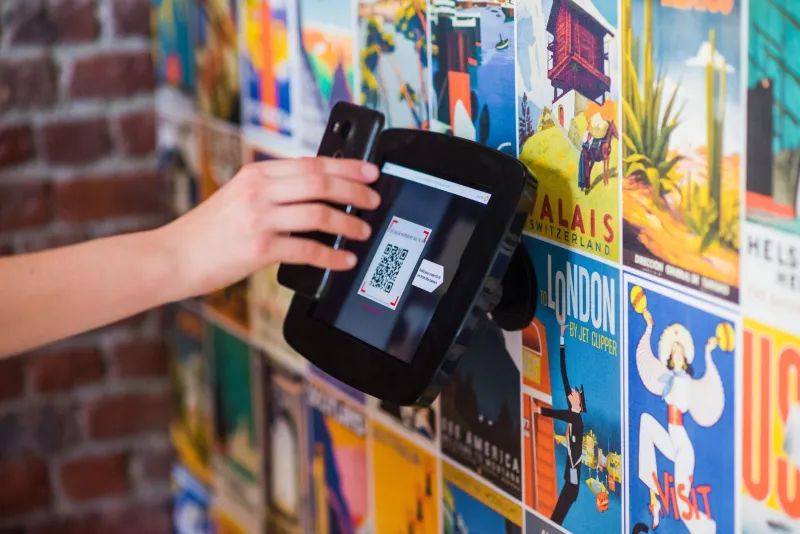
If there's one place this matters most for small businesses, it's anything physical. A QR code on packaging, a yard sign, a direct mailer, a menu — that's a commitment with a longer shelf life than any digital ad. Big brands can eat the cost of a dead printed link; a local business with 2,000 pieces of printed packaging cannot.
Static QR codes baked into print are the small-brand version of a Super Bowl ad: unchangeable, expensive, and often pointing somewhere that stopped being relevant months ago. A QR code that encodes an editable short link is the opposite — print once, retarget forever.
Agility Is a Strategy, Not a Hack
There's a mindset shift here that goes beyond tactics. Big-budget marketing treats campaigns as events — planned, launched, concluded. Small brands win by treating campaigns as living systems that respond to what the data says.
None of this requires a bigger budget. It requires building flexibility into the plumbing: every campaign runs through links you can edit, every destination is a decision you can revisit, and every click is information you act on the same day — not the next quarter.
The Super Bowl spot airs once and is frozen forever. Your links can change five times before lunch. That's not a consolation prize for having a smaller budget. Used well, it's the reason a small brand can out-convert a much bigger one during the highest-stakes shopping week of the year.